- Lesson
Bug Hunt: Are Bugs Alive?
- Primary
- Year 3-4
- Science
- Biology
- Environmental
- Biodiversity
Loading page...
Bugs may be small, but they play a big role in keeping our ecosystems thriving. Uncover their hidden world through our resources created with the Invasive Species Council and Invertebrates Australia. Using a biodiversity and biosecurity lens, these Science and Geography lessons explore Australia’s diverse invertebrates while connecting learning to real-world science through the award-winning Bug Hunt Australia project, available year-round on iNaturalist.
These curriculum-aligned lessons for Years 3 - 10 teach students about Australia’s native invertebrates, biosecurity and invasive species, how other animals interact with bugs, and the role of citizen science in monitoring and managing invasives.
Get outdoors with the national Bug Hunt Australia project, led by Invasive Species Council and Invertebrates Australia. Students use iNaturalist to record local invertebrates, contributing real data that protects native species and detects invasives. The Bug Hunt runs year-round, so you can participate when it suits your class.
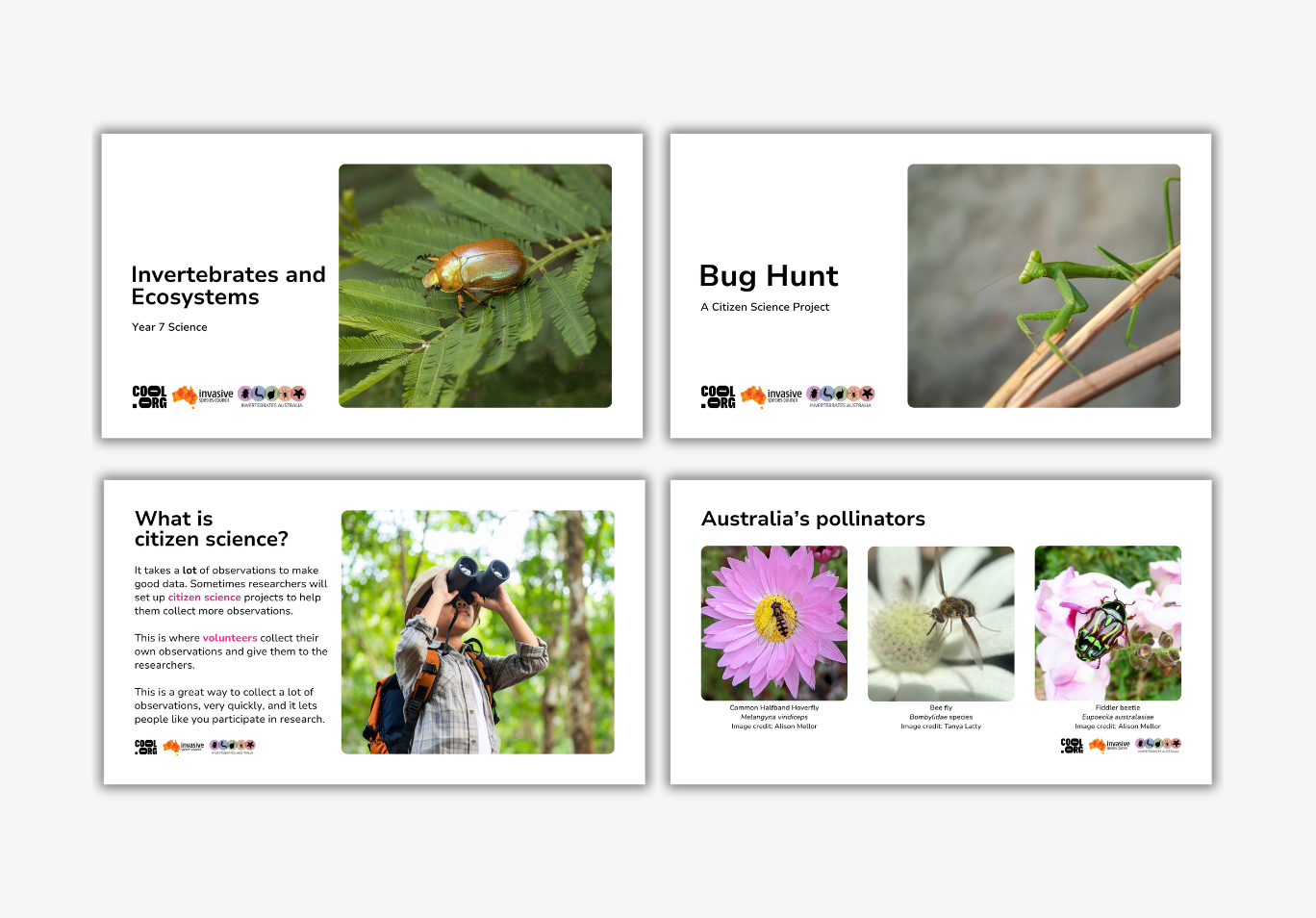
Through these Bug Hunt lessons, your students will:
🪲 Investigate invertebrates as consumers, producers, and decomposers
🪲 Explore human impacts on ecosystems and biodiversity
🪲 Identify pollinators and their role in plant reproduction
🪲 Understand species and ecosystem interconnections
🪲 Examine invasive species and integrated pest management
🪲 Build critical thinking, digital literacy, and ethical scientific practices
🪲 Take part in the Bug Hunt to record and analyse observations.
The Invasive Species Council is Australia’s leading advocate for protecting native wildlife and ecosystems from invasive plants, animals, and pathogens. They work to raise awareness, influence policy, and engage communities in practical solutions to prevent and manage invasive species.
Invertebrates Australia champions the conservation and appreciation of Australia’s native invertebrates. They provide research, education, and community programs that highlight the vital role these species play in healthy ecosystems and biodiversity.