- Unit
What Handy Hands
- Primary
- Year 5-6
- Health and Physical Education
- Health
- Technology
- Design and Technologies
Loading page...
Explore innovation and inclusivity through assistive devices. Created in partnership with Free 3D Hands, these Australian Curriculum–aligned HPE and Design & Technologies lessons for Years 5 - 8 bring real-world design into the classroom as students investigate limb differences and develop their own assistive device concepts using human-centred design thinking.
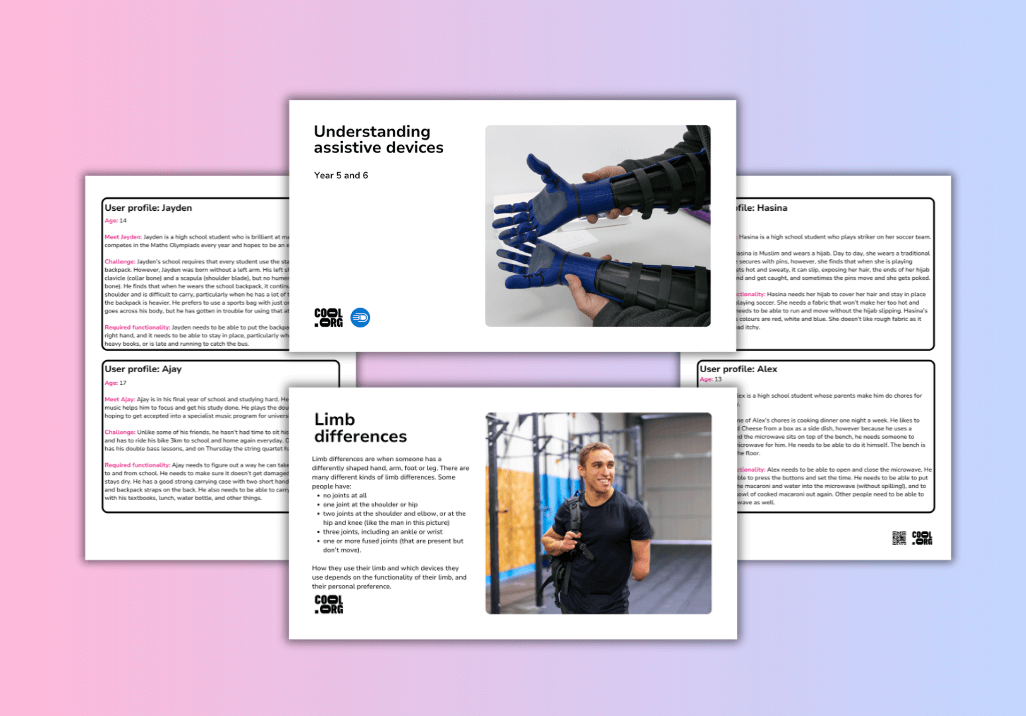
Good design starts with people. In these lessons, your students will explore the real needs of people with limb differences and use human-centred design to create assistive devices that tackle real accessibility challenges.
They'll build empathy through case studies, develop design criteria based on user needs, test and refine prototypes, and learn how accessibility, functionality, and aesthetics come together to improve lives. Each lesson includes videos, worksheets, and guided activities that empower students to become designers who create real change.
These lessons will support your students to:
🦾 Build empathy by exploring the experiences of people with limb differences
🦾 Use design to tackle real accessibility challenges
🦾 Develop and test assistive device prototypes using real design criteria
🦾 Understand how 3D printing enables affordable, customised prosthetics
🦾 Evaluate designs for sustainability, accessibility, and functionality
🦾 Give constructive peer feedback to improve solutions.
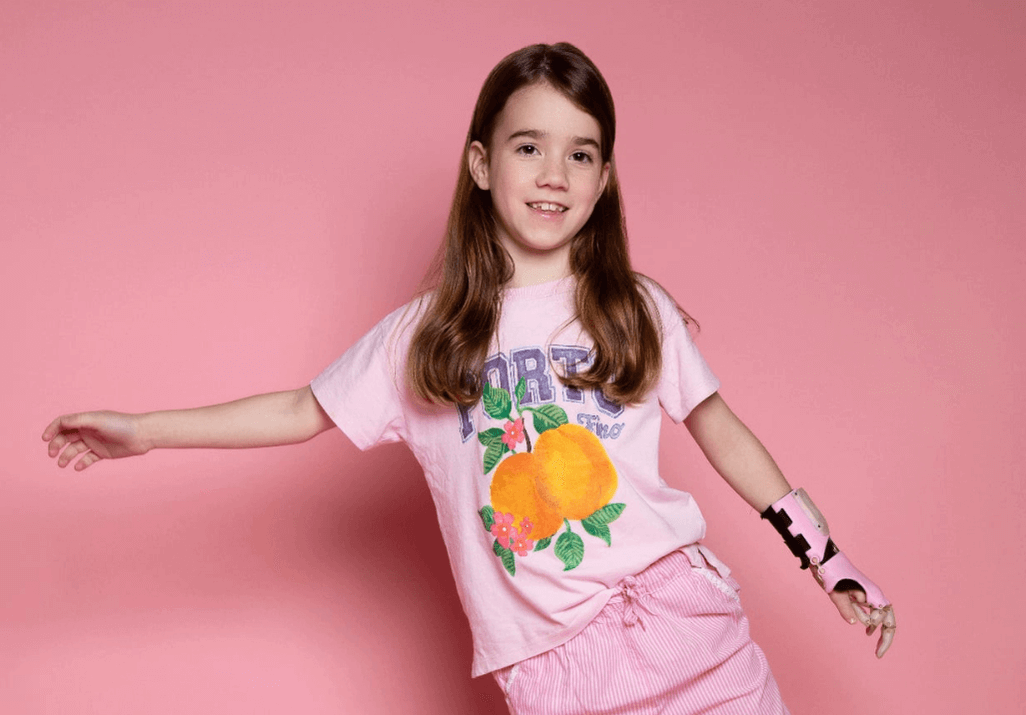
Free 3D Hands is an Australian charity that designs and manufactures 3D-printed assistive devices, including prosthetic hands and arms, which they provide at no cost to users. Their designs are released under an open-source licence, allowing anyone with a 3D printer to download, produce, and customise the devices.
By using low-cost materials and accessible production methods, Free 3D Hands aims to reduce financial and geographical barriers to assistive technology for people with limb loss or differences.