- Unit
- Cool+
- ...
Climate Science
- Secondary
- Year 9
- Science
- Earth and Space
- Environmental
- Climate Change
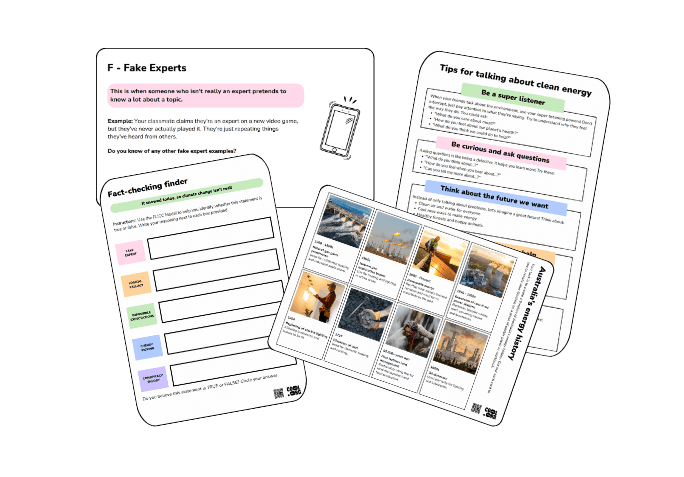

But you might know us as Cool Australia (we've been creating resources for Aussie teachers for over 16 years). While our name has changed, our mission hasn't. Our real-world, curriculum-aligned teaching resources equip educators to teach the stuff that matters, creating better outcomes for humanity.
Create a free Cool.org account to download our free units, lesson plans and activities, or upgrade to a Cool+ subscription. For less than $3 per week on our Annual Plan, you get unlimited access to our full catalogue of resources, including tons of high-quality, cutting-edge professional learning on demand.
From reading comprehension and phonics worksheets to comprehensive professional learning courses, our resources are designed to save you time and offer actionable strategies and insights, enabling you to focus more on doing what you do best.
These professional learning courses are filled with teaching strategies and tips to help you reduce the stress that often comes with challenging behaviours in challenging classrooms. Better yet, our course designers know from firsthand experience that student behaviour can sometimes make teaching young people challenging for educators and for other students.
The Cool.org Hope and Act Frameworks have been developed to support educators in teaching about challenging topics in ways that inspire hope and action whilst ensuring psychological safety. They are grounded in research from positive psychology and Hope Theory, Design Thinking methodologies and critical and creative thinking.





If you have any questions, you can get in touch and we'll help you as soon as possible.
Many of our resources are free, but this requires an active Cool+ subscription. Upgrade to Cool+ now, or sign-up for a free account.
Enjoy your first month of Cool+ on us!
No commitment.Cancel anytime in your account setting at least one day before the 1st-free month ends. Plan automatically renews annually, starting 12 Jan 2024 until cancelled.
Many of our resources are free, with an option to upgrade to Cool+ for premium content.
Already have an account? Log in
Welcome back!
Don't have an account yet?
Log in with:
Create your free Cool.org account.
Many of our resources are free, with an option to upgrade to Cool+ for premium content.
Already have an account?
Sign up with:
By signing up you accept Cool.org's Terms and Conditions(Opens in new tab) and Privacy Policy(Opens in new tab).